


Field Validation of Novel Low-Cost Underwater Robot for Deepwater Exploration and Characterization
Completed
Project Summary (Year One)
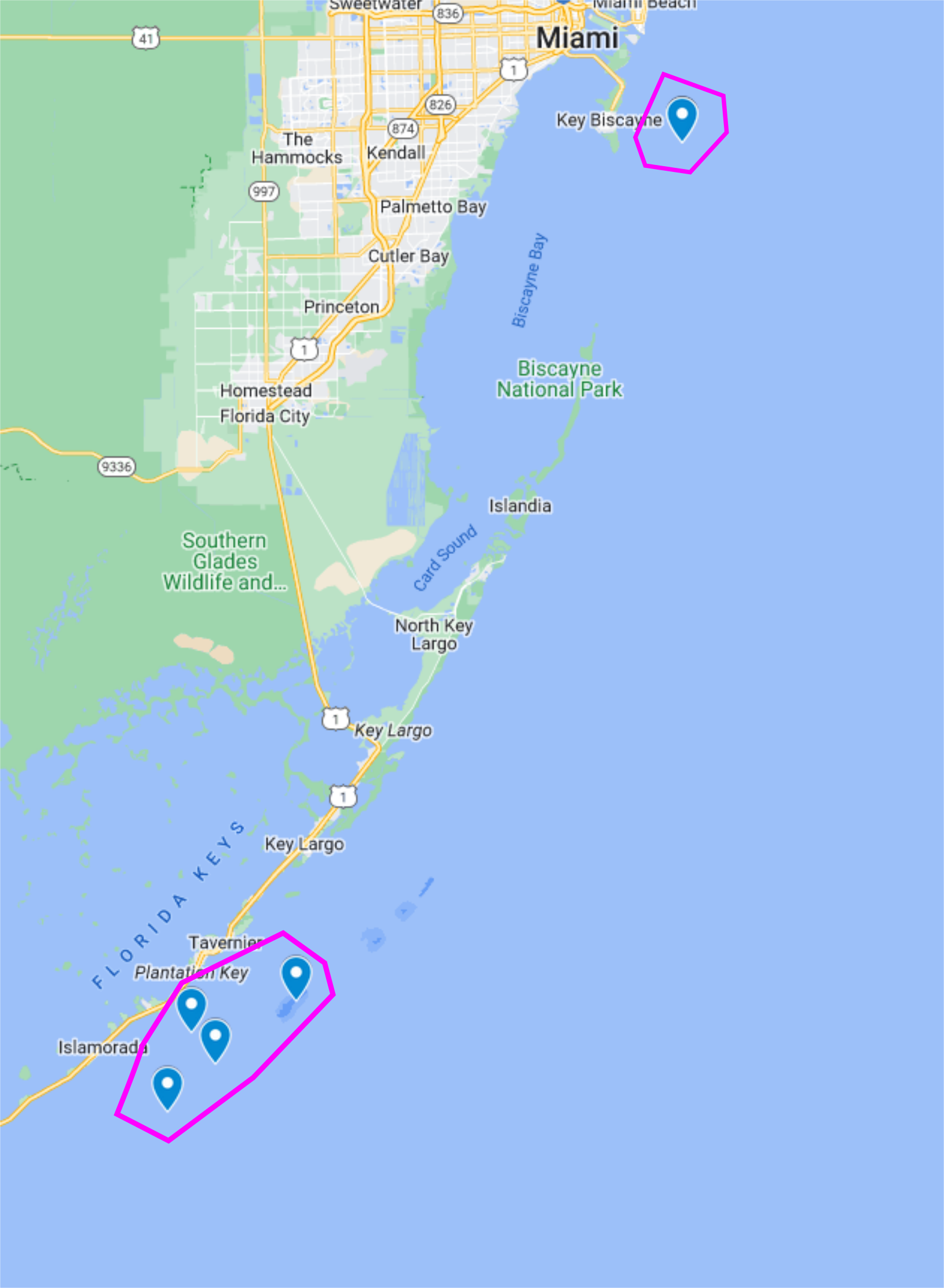
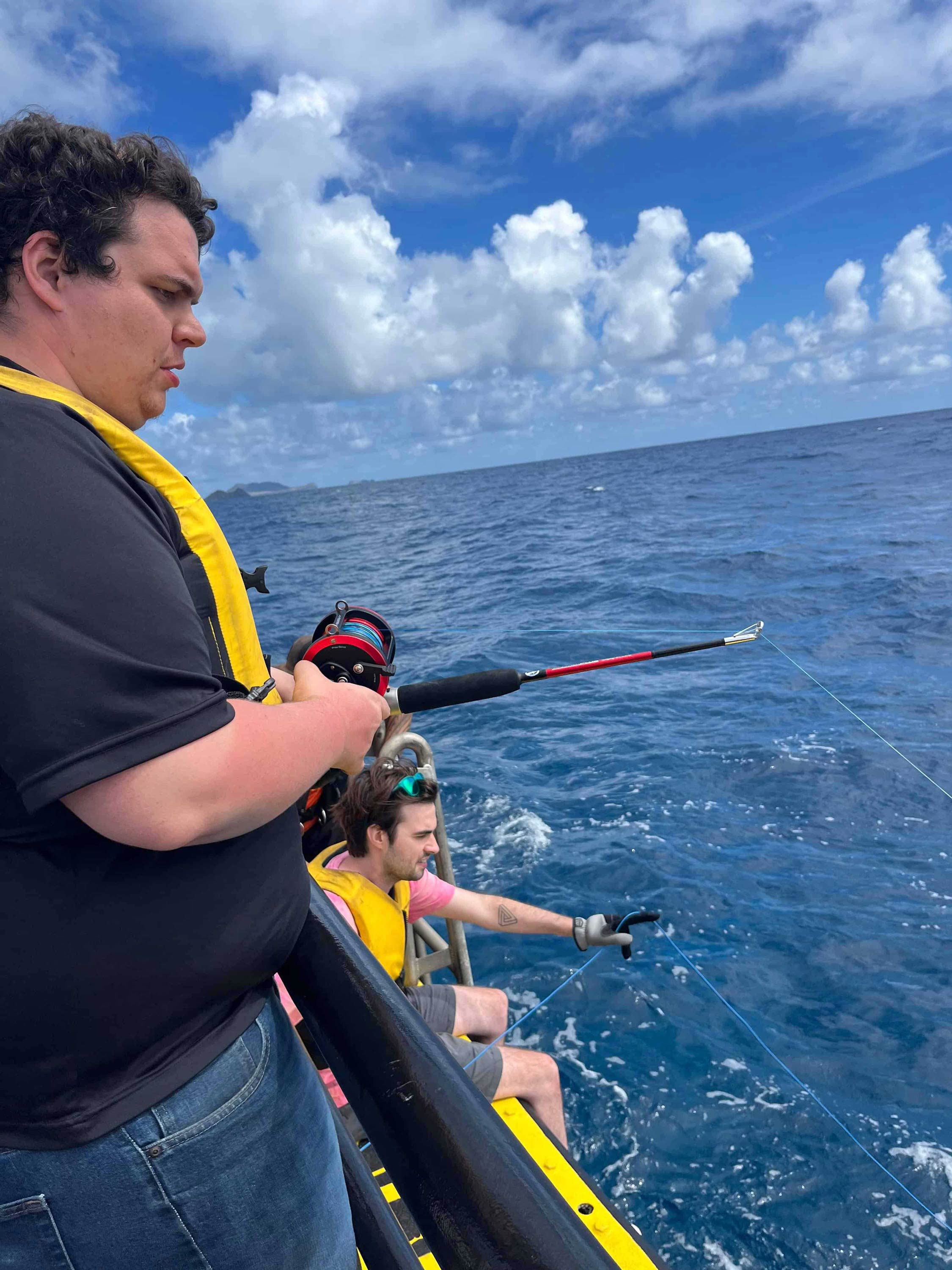
As part of an effort to help protect deep-sea coral ecosystems, a team of engineers and scientists have been developing two low-cost, open-source, underwater vehicle systems for the survey and classification of deep-sea corals. From August 14 to 18, 2023, they successfully tested these systems and collected data at natural and artificial reefs near Key Biscayne, Florida, and in the Florida Keys known for their high diversity and density of corals, including Emerald, Rainbow, Conch, and Eagle reefs.
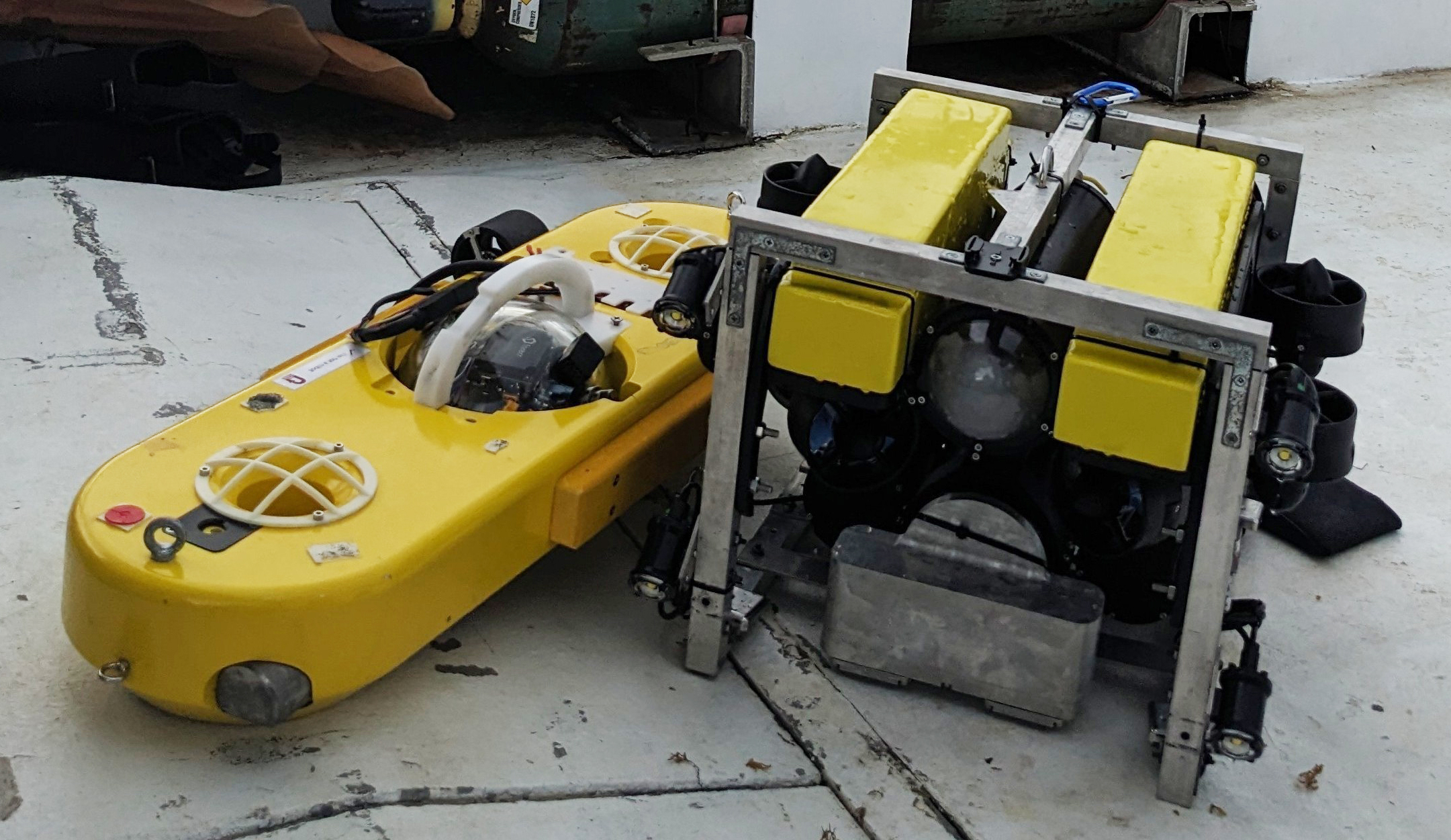
The DROPSphere autonomous underwater vehicle (AUV) and the hybrid remotely operated vehicle (ROV)/AUV Bruce were the stars of this project. Compact and custom-built using off-the-shelf parts, these underwater vehicles are deployable by a single operator, affordable, and open source.
Download largest version (png, 800 KB).
Download largest version (jpg, 1.23 MB).

Download largest version (jpg, 2.27 MB).
Project Summary (Year Two)
During their second and final year of fieldwork, this team of engineers and scientists tested two low-cost underwater vehicles during shore-based day operations at the Makapu‘u Precious Coral Bed, a federally protected deepwater habitat off the east coast of Oahu, Hawai‘i. Despite significant technical setbacks, they collected seafloor imagery, gained valuable insights for further vehicle development, and provided important hands-on learning for undergraduate students.

Location of fieldwork during Field Validation of Novel Low-Cost Underwater Robot for Deepwater Exploration and Characterization in 2025. Image courtesy of Field Validation of Novel Low-Cost Underwater Robot for Deepwater Exploration and Characterization. Download largest version (jpg, 106 KB)
The Vehicles
The team’s primary objective was to continue evaluating the DROPSphere autonomous underwater vehicle (AUV) and hybrid remotely operated vehicle (ROV)/AUV Bruce with the goal of demonstrating that affordable robotic platforms can support long-term monitoring and research in sensitive and remote marine environments. Specifically, they aimed to assess the vehicles’ imaging capabilities, navigation precision, and operational reliability in challenging oceanic conditions.
Bruce remained unchanged since the previous fieldwork in 2023, but several upgrades had been made to the DROPSphere system, including a new microcontroller, onboard computers, and thrusters.

DROPSphere autonomous underwater vehicle (AUV), a custom-built AUV equipped with cameras to record seafloor images and/or video, during Field Validation of Novel Low-Cost Underwater Robot for Deepwater Exploration and Characterization in 2025. Image courtesy of Field Validation of Novel Low-Cost Underwater Robot for Deepwater Exploration and Characterization. Download largest version (jpg, 728 KB).

Bruce hybrid remotely operated vehicle (ROV)/autonomous underwater vehicle, a custom-built vehicle developed for deepwater operations, operating in ROV-mode during Field Validation of Novel Low-Cost Underwater Robot for Deepwater Exploration and Characterization in 2025. Image courtesy of Field Validation of Novel Low-Cost Underwater Robot for Deepwater Exploration and Characterization. Download largest version (jpg, 789 KB).
Multimedia
The images from this project add context and help bring the project to life. Click on a preview image below to view the full image and get more information.
Education
Our Learn & Discover page provides the best of what the NOAA Ocean Exploration website has to offer to support educators in the classroom. Each theme page includes lessons, fact sheets, ocean facts, exploration notes, multimedia, and related past expeditions and projects. Below are related top education themes for this project.
Team
Each team member’s path to this project is unique. Read their bios to find out what makes them ocean explorers.


Resources & Contacts
- Emily Crum
Communication Specialist
NOAA Ocean Exploration
ocean-explore-comms@noaa.gov