


2026 American Samoa ROV + Mapping Exploration
Exploration Team (EX2606)

Katlin Bowman Adamczyk, Ph.D., is a marine geochemist and oceanographer with the Global Seabed Mineral Resources group at the U.S. Geological Survey’s Pacific Coastal and Marine Science Center in Santa Cruz, California. She has a bachelor of science and doctoral degree in environmental sciences from Wright State University and completed postdoctoral training at the University of California Santa Cruz. She has participated in over 20 expeditions across the globe including a 65-day voyage to the North Pole, thousands of miles of hydrographic transects in the Atlantic and Pacific Oceans, and seafloor exploration via human occupied and remotely operated deep-sea vehicles. In 2024, she was named to the Explorers Club 50 list and has been a National Geographic Explorer since 2018.

Val Brown is the research coordinator for the National Marine Sanctuary of American Samoa. Val holds a Master’s of Public Affairs with a focus on environmental policy and natural resource management and a Master of Science in Environmental Science with a focus on applied ecology from Indiana University. She has over two decades of experience in the Pacific Islands region focused on the application of scientific data to enhance the management and conservation of marine resources. Val also has a passion for science communications and engagement activities and is excited to assist with ship-to-shore interactions. She has conducted ship-based expeditions in both the Mariana and Samoan Archipelagos, exploring a wide range of marine ecosystems from the intertidal to the deep sea.

Nikki Morgan, Ph.D., started with NOAA Ocean Exploration in 2026 as a full-time expedition coordinator. She previously coordinated nearly a dozen deep-sea expeditions from 2012-2021 in the North Pacific and off the Gulf coast of Florida, using numerous technologies including autonomous underwater vehicle Sentry, human occupied underwater vehicles Pisces IV and Pisces V, and remotely operated vehicle Lu’ukai. Nikki studied connectivity of deep-sea communities using video surveys and population genetic structure of the precious red coral Hemicorallium laauense, and she has an unabiding love for deep-sea octocorals. She also has a not-so-secret passion for mapping and digital map making, which can be seen in a number of her publications. She holds doctoral and master’s degrees in oceanography from Florida State University and a bachelor’s degree in marine biology from the University of Texas at Austin.

Kasey Cantwell is the operations chief for the Expeditions and Exploration Division of NOAA Ocean Exploration. Kasey has a master’s degree in marine affairs and policy and marine geology and geophysics and a bachelor’s degree in marine science and biology, both from the University of Miami Rosenstiel School of Marine and Atmospheric Science. Kasey joined NOAA Ocean Exploration in 2012 and is responsible for overseeing the office’s operational portfolio, including telepresence-enabled expeditions aboard NOAA Ship Okeanos Explorer. In her role as an expedition coordinator for remotely operated vehicle expeditions, she has coordinated over two dozen expeditions and projects, including multidisciplinary expeditions throughout the U.S. Exclusive Economic Zone. Beyond deep-sea exploration, Kasey’s background includes imagery-based mapping of coral reefs throughout the Caribbean, long-term ecosystem monitoring, and evaluating resource management strategies to improve efficiency and data quality.

Sean Kennison is a mechanical engineer with a minor in engineering mechanics. He has been sailing aboard NOAA Ship Okeanos Explorer since 2014, upgrading, maintaining, and piloting the remotely operated vehicle system of Deep Discoverer and Seirios. His mission is to advance the nation’s capacity to explore the world’s ocean through highly specialized deep-submergence equipment and to train the next generation of deep-sea engineers on critical depth systems.

Chris Ritter holds bachelor’s degrees in ocean engineering and aerospace engineering with a minor in mathematics from Virginia Tech. Chris first sailed on NOAA Ship Okeanos Explorer on the Cayman Rise Expedition in 2011, just prior to being hired full time by the Naval Sea Systems Command (NAVSEA 05). Since then, he has assisted with the upgrade, maintenance, and piloting of the remotely operated vehicle (ROV) system on Okeanos Explorer as well as other deep submergence equipment on multiple marine platforms. He is a skilled dive supervisor, pilot, co-pilot, and navigator and is currently a member of the ROV Mechanical Engineering team.

Fernando Aragon is a skilled engineer with over a decade of experience in the marine industry, specializing in the development and optimization of software for remotely operated vehicle systems and data pipeline management. He focuses on building solutions that enhance the performance and capabilities of marine robotic systems. Fernando holds a degree in mechanical engineering from the University of Hawai‘i, where he explored multiple disciplines, including field robotics, orbital mechanics research and conceptual design. He worked at the Field Robotics Laboratory, where he supported operations, testing, and software development for two uncrewed surface vehicles. These early experiences sparked a lasting passion for the design and development of robotic systems, which continues to drive him today.

Michael Dennin graduated with a bachelor’s degree in mechanical engineering and a minor in mathematics from the University of Alabama (Roll Tide). He has spent the last three years in the space industry, taking on roles including quality, manufacturing, and mechanical engineering for Leidos, developing and fabricating infrared sensor payloads. Michael lives in San Diego, California, and in his free time, Michael enjoys surfing, skiing, traveling, or picking up whatever skill (technical or recreational) that catches his eye. This is Michael’s first expedition, so he brings an unwavering sense of curiosity and eagerness to learn from the many talented team members on NOAA Ship Okeanos Explorer.

Brian Doros is a television broadcast engineer who was born in Long Branch, New Jersey. Active in sports throughout high school, Brian moved to Southern California and spent the next few years traveling the world surfing and then exploring his technical interests at college in San Diego, California. After changing his course of study to electronics, he focused on broadcast electronics and technical maintenance in broadcasting. His career path first led him to employment at IBM/MCA Video Laser Disc Company in Costa Mesa, California, doing research and development in the early days of optical laser disc, then to Los Angeles, where he specialized in film for television postproduction. The next several years were spent working in the Hollywood postproduction industry at Paramount Pictures, MGM/Lorimar Telepictures, 20th Century Fox, NFL Films, and Sony Broadcast Company North America, contributing to his 25 years of experience in television postproduction and broadcast systems integration. After Hollywood, Brian worked in the field, traveling and upgrading network television facilities to digital broadcasting capabilities during the analog to digital conversion. He now has moved on to less broadcast traditional applications of his background working in his current position.

Ehnot has been drawn to the field of marine robotics from the instant she learned about it during her first semester of college. She received her bachelor’s degree in ocean engineering from the University of New Hampshire (UNH), spending four years on a team building an uncrewed surface vehicle (USV) from hobby robotics parts. To better understand the software side of robotics, she continued at UNH to complete a master’s in ocean engineering. She conducted her research within the marine robotics laboratory at the Center of Coastal and Ocean Mapping, supporting USV expeditions from the Southern Pacific to the Great Lakes. In her research, she worked to train an open-source computer vision algorithm to detect small obstacles for USVs. Persistently curious and a life-long lover of the ocean, she is thrilled to begin her work with underwater vehicles aboard NOAA Ship Okeanos Explorer as a member of the remotely operated vehicle team. Jenna currently resides in New Hampshire and can be found tinkering at the local makerspace or walking along the coast in her free time.

Treyson (Trey) Gillespie lives in Charleston, South Carolina, and holds a bachelor’s degree in geology and environmental geosciences and a master’s degree in environmental and sustainability studies from the College of Charleston. While there, Trey completed the BEnthic Acoustic Mapping & Survey (BEAMS) program, where he gained experience processing and analyzing multibeam bathymetric data for applied scientific research. As a result, Trey has worked with a variety of international and domestic organizations such as Seabed 2030, Geological Survey Ireland, the INFOMAR Project, the U.S. federal government (as a NOAA explorer-in-training and as an independent contractor), and aboard several University-National Oceanographic Laboratory System (UNOLS) vessels in support of oceanographic science and as a mentor to undergraduate students and interns. Since 2019, Trey has worked with academic, commercial, and governmental vessels to map our global ocean in support of the greater scientific community. Trey now works in a scientist III role with the University Corporation for Atmospheric Research, serving as a member of the technical operations team for NOAA Ocean Exploration.

Hailing from Fuquay-Varina, North Carolina, Matt Giovinetti joins NOAA Ship Okeanos Explorer with 35+ years of high-octane production experience and a deep-seated passion for exploration and science. As a seasoned director of photography and FAA Part 107 drone pilot, he has spent much of the last two decades as the eye behind the lens (and the propellers) for Food Network’s Diners, Drive-Ins and Dives and Travel Channel’s Bizarre Foods: Delicious Destinations, traveling the world to film — and eat — the best the globe has to offer. A lifelong aviation and space enthusiast, Matt frequently geeks out on the latest aerospace developments and all things flight-related on YouTube. Twice a week, he trades his cameras and drones for a microphone as “Matt Gio,” the on-air personality for Cape Fear Radio (catch him Tuesdays and Fridays, 5-7 p.m. ET). On air, he enjoys ranting about critical topics like shopping cart etiquette in “Gio’s Completely Unqualified Opinion” and famously ends every show with a series of cringeworthy dad jokes. At home, he is a dedicated chef currently obsessed with the art of wok cooking, and he is most happily supported by his wife Lise-Marie, their dog Lilou, and their cat Tinky. Matt is thrilled to join Okeanos Explorer and ready to help the team capture the next great discovery — and perhaps swap a few recipes in the galley.

Jennifer Green is a data manager with NOAA’s National Centers for Environmental Information through the Northern Gulf Institute at Mississippi State University. She earned a Bachelor of Science in fisheries management from Delaware State University and a Master of Science in coastal ecology from the University of Southern Mississippi. She has over 15 years of research experience in passive acoustic telemetry, which focused on monitoring spatial and temporal movement patterns of various species, including: Atlantic horseshoe crab, Atlantic and Gulf sturgeon, striped bass, bull and sand tiger sharks, tripletail, and southern flounder. This will be Jennifer’s first expedition on NOAA Ship Okeanos Explorer and she’s very excited to experience the adventure and learn new things. Jennifer resides in Ocean Springs, Mississippi, with her husband, daughter, and two dogs. She enjoys outdoor activities, crafting, and gardening.


Sarah Haberstroh is an unmanned systems integration professional with more than 13 years of experience supporting government and commercial maritime operations, expeditionary missions, and subsea robotics programs. Her background includes autonomous underwater vehicle (AUV) and remotely operated vehicle deployment, offshore mission execution, robotic systems integration, training, and lifecycle management. She has led underwater operations for complex offshore recovery projects, managed the Naval Special Warfare AUV program of record and served in the U.S. Navy supporting global deployments.

Margaret Hanley holds a bachelor’s degree in geology from the College of Charleston and is an alumna of the BEnthic Acoustic Mapping and Survey (BEAMS) program. She is pursuing a master’s degree in marine science with a concentration in hydrography at the University of South Florida and the Center for Ocean Mapping and Innovative Technologies. Her thesis research uses multibeam data and video imagery to characterize glacial seafloor morphology and habitats along the Sabrina Coast in East Antarctica. Her introduction to ocean exploration came as an explorer-in-training (EIT) aboard NOAA Ship Okeanos Explorer. She later served on the ship as a mapping watch lead, assisting with mapping operations and training other EITs. Her additional professional experience includes time with NOAA’s Office of Coast Survey External Source Data team; charting work with Woolpert in Nome, Alaska; and remote survey operations with Saildrone. Margaret is based in St. Petersburg, Florida, where she can often be found on the water or out with her dog.

Anna Lienesch is a data manager with NOAA’s National Centers for Environmental Information (NCEI) through the University of Maryland’s Cooperative Institute for Satellite Earth System Studies. After graduating with a marine science degree, Anna conducted long-term environmental monitoring programs across three continents where she developed a diverse background in biological, geological, chemical, and physical oceanography, emphasising data standardization throughout multiple state and federal programs. Anna has been with NCEI and NOAA Ocean Exploration’s Data Management Team since 2018, serving as a sample data manager for NOAA Ship Okeanos Explorer expeditions for more than five years. When not at sea, Anna serves as the team lead for NOAA Ocean Exploration’s competitive grant program’s end-to-end data management activities and is the NCEI liaison to various NOAA divisions and line offices. Anna is originally from Maryland, but currently resides in Colorado where she enjoys camping, hiking, and gardening.

Manal Murangi is a documentary filmmaker and photographer with experience in video engineering, video production, and photography. She received her undergraduate degree in filmmaking in 2021 from the University of Maryland, Baltimore County, and received her Masters of Arts in Marine Affairs from the University of Rhode Island in 2026. This is her first season with NOAA Ship Okeanos Explorer and she has sailed with Exploration Vessel Nautilus since 2023. She has also worked with organizations such as Black in Marine Science and Maryland Sea Grant. She enjoys reading and hanging out with her cats when she’s not at sea.

David Ritter has a bachelor’s degree in fisheries science from Virginia Tech and a master’s degree in fisheries management from Montana State University. He has spent much of his career working with remote telemetry systems and underwater monitoring technologies and video systems, including multiple remotely operated vehicle (ROV) platforms. He joined the ROV team on NOAA Ship Okeanos Explorer in 2025 on the Papahānaumokuākea Mapping and ROV expedition.

Miles Saunders holds a master’s degree in geospatial intelligence from Penn State and brings more than 15 years of progressive experience leading hydrographic survey operations, geospatial analysis, and subsea data acquisition across government, academic, and private-sector environments. Most recently, Miles served as chief of hydrographic survey for the U.S. Army Corps of Engineers, Savannah District, where he trained survey technicians in hydrographic principles, data processing, and the interpretation of fluid mud in echograms. Earlier in his career, Miles managed the Fisher Deep-sea Lab at Penn State, and mentored students conducting deep-sea research focused on coral ecosystems impacted by the Deepwater Horizon oil spill. When he is not offshore, Miles enjoys spending time with his daughter and exploring the lowcountry around Savannah, Georgia.

Jacob Stock began his career as a sonar technician in the U.S. Navy, where he operated and maintained acoustic systems aboard different vessels. He transitioned into hydrographic research after obtaining a bachelor’s degree in geology from the College of Charleston as a member of the BEnthic Acoustic Mapping and Survey (BEAMS) program. He currently serves as a senior engineering research technologist at the University of South Florida Center for Ocean Mapping and Innovative Technologies. In this role he’s the chief survey technician for Research Vessel Tocobaga and supports students and faculty on projects involving sonar data acquisition, processing, and interpretation. In addition to his work at the university, Jacob has done contract work with various private and government organizations ensuring high-quality data collection at sea.

Levi Unema is an electrical engineer specializing in deep-sea exploration through remotely operated underwater vehicles. An Eagle Scout from Lynden, Washington, he holds a bachelor’s degree in electrical engineering with a certificate in electric power engineering from Michigan Technological University. He began his work in ocean science in 2016, designing, building, operating, and maintaining advanced robotic systems for oceanographic missions. Unema has sailed on expeditions aboard the NOAA Ship Okeanos Explorer, Exploration Vessel Nautilus, and Research Vessel Falkor too, serving as an electrical engineer, navigator, pilot, and co-pilot while supporting live broadcast video operations. He is based in Newport, Rhode Island, where he continues to advance technologies that enable deep ocean exploration.
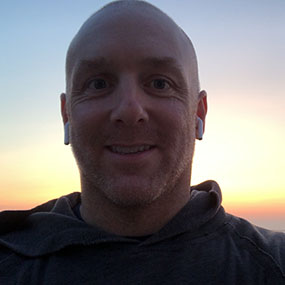
Christopher (Chris) Wright holds a Bachelor of Science in business administration from the University of Mary Washington and a Master of Business Administration from Rollins College. After graduation, he worked as a network and systems administrator and engineer in the hospitality industry in the Northeast and Mountain West for more than 15 years. He completed his first expedition aboard NOAA Ship Okeanos Explorer in 2019, and remains extremely excited about continuing the journey to explore ocean basins around the world. Chris and his family currently reside in Newport, Rhode Island.