


Photo & Video Log
This page contains photos and videos taken during the
Lophelia II 2008 Exploration in the previously unexplored deep coral sites of the Northern Gulf of Mexico from September 20 - October 2, 2008. Click on any image to view
a larger version and for additional information.
If a movie camera icon  is
present, a QuickTime video can be viewed by clicking on the image. Other
video formats are available on the linked pages. If a Podcast icon
is
present, a QuickTime video can be viewed by clicking on the image. Other
video formats are available on the linked pages. If a Podcast icon  is
present, a video or audio file is available for download or you can subscribe to the RSS Podcast Feed.
is
present, a video or audio file is available for download or you can subscribe to the RSS Podcast Feed. 
If a slideshow icon  is
present, a visual log of exploration images can be viewed. You can scroll
through them one by one, or select the play button for an automatic slideshow.
is
present, a visual log of exploration images can be viewed. You can scroll
through them one by one, or select the play button for an automatic slideshow.
(HR) = "High Resolution" images available.
Video & Slideshows

September 28
View a video of the Chain Catshark in its natural habitat, surrounded by anemones, sea fans, and corals. (Quicktime, 2.2 Mb.)

September 26
View a video of a snowy grouper, a large predators in the Deep-water reef community habitat. (Quicktime, 2.1 Mb.)

September 26
View a video of a redeye gaper venting water at 240 meters at the Green Canyon. (Quicktime, 1.2 Mb.)
Images
Leg 1 Summary
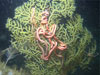
Lophelia pertusa colony with polpys extended. (HR)
Leg 1 Summary
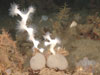
During the first dive of the cruise, scientists observed a large antipatharian (black) coral community. (HR)
Leg 1 Summary
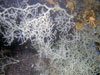
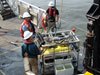
The Saab SeaEye Falcon DR ROV allowed scientists to explore the deep ocean during the cruise.
October 1
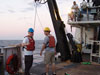
Scientist prepare to help recovery the remotely operated vehicle (under the watchful eye of chief scientist Erik Cordes).
October 1
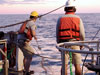
Matt pulls the ROV to the surface after a dive.
October 1
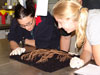
Leslie and scientist Maria Pia Miglietta closely examine a specimen collected during a dive.
October 1
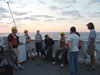
Chief scientist Erik Cordes meets with the science party at the end of the day to talk about upcoming explorations.
October 1
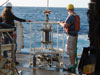
Jay helps Senior Survey Technician Missy Partyka retrieve the conductivity temperature depth (CTD) logger.
September 30
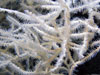
A large Antipatharian.
September 30
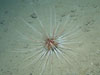
We saw this type of sea urchin at several sites, generally on soft bottoms.
September 30
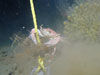
A crab attempts to climb on the rope of one of the deployed instruments (a temperature logger).
September 30
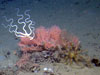
A brittle star in a feeding posture, sitting on top of a very small gorgonian next to a yellow crinoid.
September 30
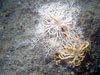
This photo represents one of the few times that we saw basket stars with their tentacles outstretched and in contact with each other.
September 29
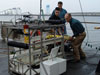
The Saab SeaEye Falcon DR ROV is loaded into its protective "garage" prior to launch.
September 29
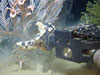
The ROV manipulator arm allows scientists to collect and bring samples to the surface for closer study.
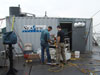
September 29
This steel-shipping container serves as the command center for the ROV.
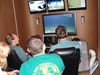
September 29
ROV pilots Matthew Cook and Geoff Cook watch the monitors inside the van with chief scientist Erik Cordes and research technician Leslie Wickes.
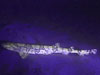
September 28
Fluorescent chain catshark at 600 meters depth from the Ocean Explorer Operation Deep Scope expedition in 2005. This shark was no more than a meter long.
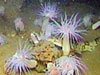
September 28
Catsharks such as this chain catshark, appear to be common in the Gulf.
September 28
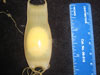
This egg case was collected accidentally while sampling a large black coral. It was unhatched, one of two specimens brought aboard by the ROV.
September 27
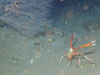
The galatheoid, Eumunida picta. The lasers on its legs are three inches apart.
September 27
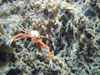
Eumunida picta nestled in Lophelia rubble.
September 27
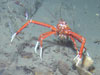
Eumunida picta challenges the remotely operated vehicle.
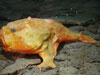
September 26
A redeye gaper at 240 m depth at the Green Canyon site.
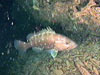
September 26
Deep-water reef communities form important feeding and spawning habitat for large predators such as snowy grouper.
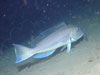
September 26
A golden tilefish (Lopholatilus) on soft sediment with a coiled seawhip in the background.
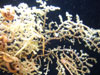
September 25
The distal end (branch tips) of a gorgonian, with polyps extended, and squat lobsters and brittle stars living on the colony.
September 25
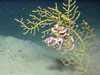
A small gorgonian with polyps retracted. The colony is attached to a small rock in soft substrate, with a brittle star on the colony and shrimp at the base.
September 25
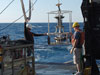
The Sea-Bird 19 plus CTD being recovered from the port side of the Nancy Foster.
September 24
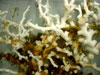
Lophelia pertusa collected from the Viosca Knoll site in a tank on board from a previous research cruise.
September 24
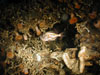
Lophelia pertusa create habitat for a number of other species at a site in Green Canyon. (HR)
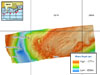
September 23
Multibeam bathmetry data for site GB201 acquired during the Lophelia II cruise.
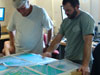
September 23
Chief scientist Erik Cordes (right) and geophysicist Bill Shedd review a bathymetric map while discussing what sites to explore next.
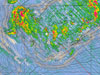
September 23
Bathymetric map with sea-floor amplitude underlay of the investigative site.
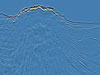
September 23
Three-dimensional seismic data were used to examine the sea floor.
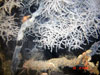
September 22
Thick branches arise from the base of a large black coral colony about 1.5 meters tall at 300 meters depth in the Gulf of Mexico.
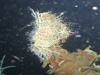
September 22
An Astrophyton basket star is perched atop the black coral colony, surrounding a dozen gooseneck barnacles.
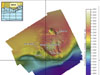
September 21
Multibeam data at Viosca Knoll 826 acquired during the Lophelia II cruise.
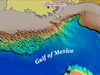
September 21
Multibeam bathymetry data for the Gulf of Mexico.
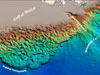
September 21
Multibeam bathymetry allows terrain models to be created for large areas of the sea floor.
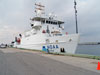
September 20
The NOAA Ship Nancy Foster sits ready and waiting before departure from Gulfport, Mississippi.
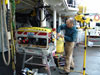
September 20
Before leaving port, the ROV was taken for a test run. Here, Matthew Cook, operations manager for SeaView Systems Inc., preps the ROV for launch.
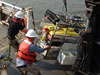
September 20
Recovering the ROV after its trial run.
September 20
The conductivity temperature depth (CTD) meter will be used to collect profile data such as temperature and oxygen as a function of depth.
Leg 1 Summary
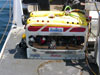
Sea Eye Falcon remotely-operated vehicle (ROV) on the deck of the Nancy Foster.
Leg 1 Summary
The Gudgeon and pintle once secured the rudder to the sternpost of the Ewing Banks Wreck.
Leg 1 Summary
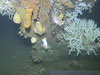
The bow of a Ewing Banks Wreck, covered with Lophelia coral, sea anemones, barnacles, and rusticles.
Leg 1 Summary
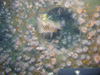
Porthole on the starboard side of Gulfoil. Numerous sea anemones are attached to the side of the ship.
Leg 1 Summary
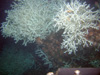
Lophelia pertusa thickets colonizing the starboard side of Gulfoil.


