


Deployable Artificial Intelligence for Exploration and Discovery in the Deep Sea
Completed
Overview
For the past two years, engineers and scientists have been developing a way for artificial intelligence-driven underwater vehicles to autonomously find, follow, and identify deep-sea animals in real time, with limited human oversight. Their Deployable AI (artificial intelligence) will help scientists, policymakers, and the public better and more rapidly understand the life that inhabits our ocean.

Download largest version (jpg, 160 KB).
Modern robotics, low-cost observation platforms, and other emerging exploration tools make underwater imaging easier. However, searching for and following animals, and then analyzing all the resulting imagery, takes a lot of effort. This new technology aims to overcome these major obstacles to discovery.
How It Works
The Deployable AI technology consists of hardware (cameras and a compact computer) and software (with several computational algorithms) to enable detection and tracking of underwater animals by a remotely operated vehicle (ROV) or autonomous underwater vehicle (AUV). During a dive, “detector” and “supervisor” algorithms review live video, looking for animals they’ve been trained to recognize (e.g., fish, jellyfish, siphonophores, and comb jellies), similar to facial recognition.
Once they find something of interest, another “agent” algorithm works with the vehicle controls algorithm to maneuver the vehicle and follow the animal slowly and far enough away to avoid disturbing it, while continuing to image it as long as possible.
Initial Testing
To ensure the agent could perform these tasks effectively, it underwent additional training in a simulated environment with an ROV and animals — much like playing a video game. After the team was satisfied with the agent’s performance, they integrated it on MBARI’s (Monterey Bay Aquarium Research Institute’s) MiniROV — since ROVs offer greater control for testing purposes — and tested and refined it, teaching it to follow an artificial jellyfish mimic in a 10-meter-deep (30-feet-deep) test tank.
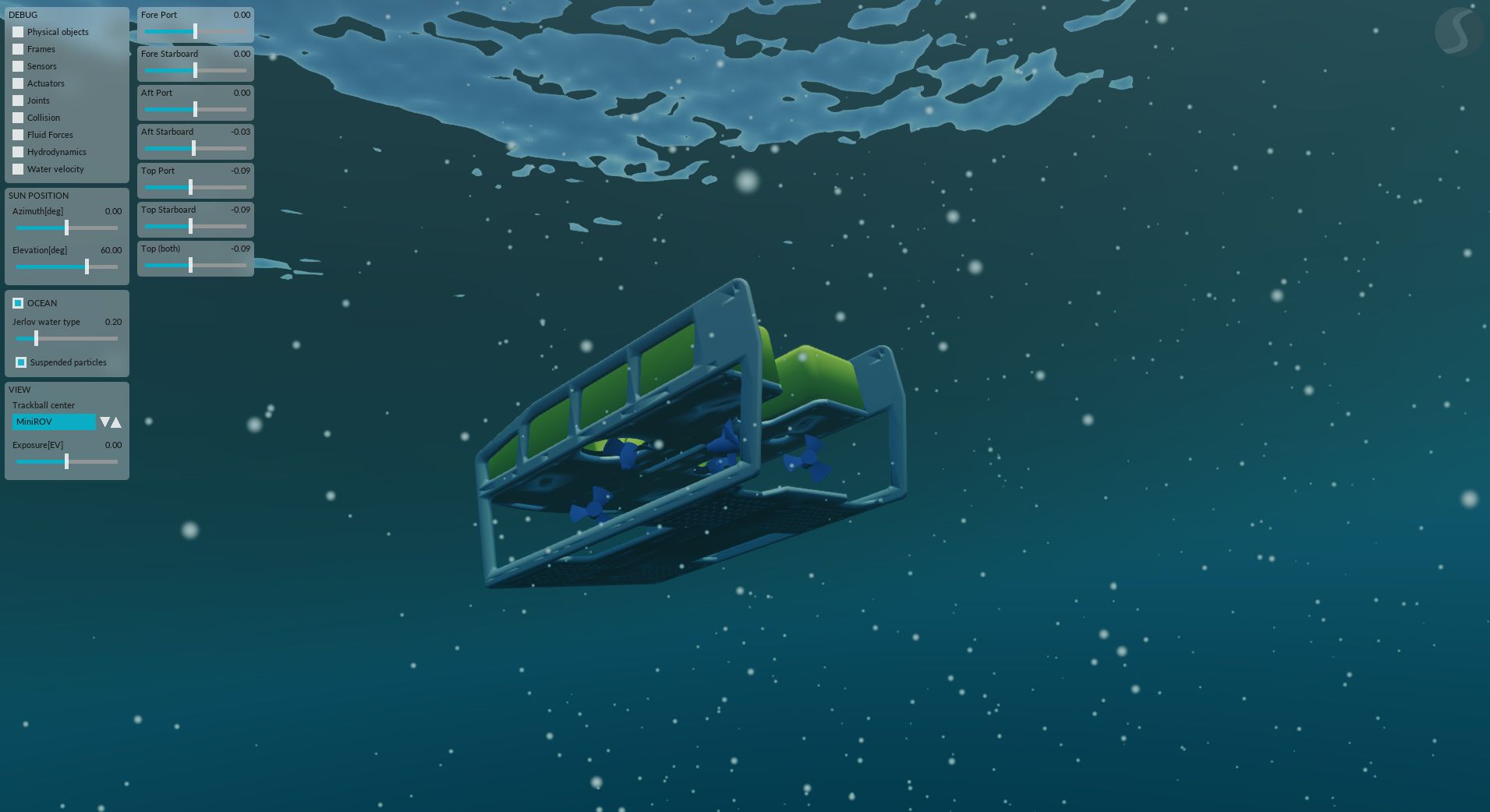
Download largest version (jpg, 405 KB).
Next Stop, the Ocean
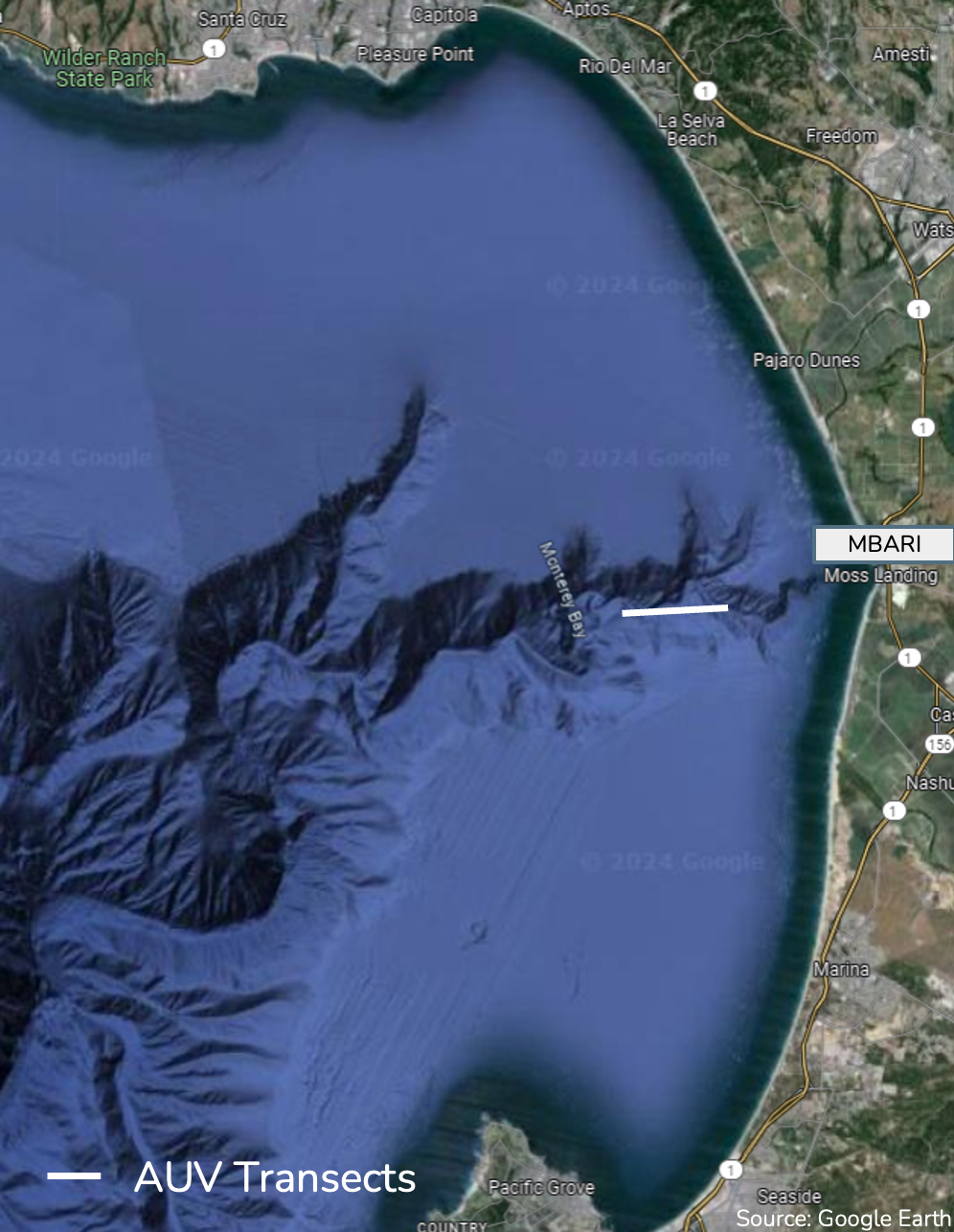
In October 2024, the agent was ready for real-world testing in Monterey Bay. Deployed on MiniROV from Research Vessel Rachel Carson, it performed both tasks relatively well — finding and following siphonophores, comb jellies, and jellyfish — but still needed work.


Screenshots captured in the control room of Research Vessel Rachel Carson during the first field test on remotely operated vehicle MiniROV of the Deployable AI developed as part of the Deployable Artificial Intelligence for Exploration and Discovery in the Deep Sea project. Image courtesy of Deployable Artificial Intelligence for Exploration and Discovery in the Deep Sea/MBARI. Download largest version on the left (jpg, 2 MB). Download largest version on the right (jpg, 2 MB).



Multimedia
The images and video from this project add context and help bring the project to life. Click on a preview image below to view the full image or watch the video and get more information.
Education
Ocean Science for Educators provides the best of what the NOAA Ocean Exploration website has to offer to support educators in the classroom. Each theme page includes lessons, fact sheets, ocean facts, exploration notes, multimedia, and related past expeditions and projects. Below is the top education theme related to this project.
Team
Each team member’s path to this project is unique. Read their bios to find out what makes them ocean explorers.


Resources & Contacts
- Emily Crum
Communication Specialist
NOAA Ocean Exploration
ocean-explore-comms@noaa.gov - MBARI
pressroom@mbari.org