


Photo & Video Log
This page contains photos and videos taken during the
Cayman Islands Twilight Zone 2007 exploration, which took place May 21 to 31, 2007. Click on any image to view
a larger version and for additional information.
If a movie camera icon  is
present, a QuickTime video can be viewed by clicking on the image. Other
video formats are available on the linked pages. If a Podcast icon
is
present, a QuickTime video can be viewed by clicking on the image. Other
video formats are available on the linked pages. If a Podcast icon  is
present, a video or audio file is available for download or you can subscribe to the RSS Podcast Feed.
is
present, a video or audio file is available for download or you can subscribe to the RSS Podcast Feed. 
If a slideshow icon  is
present, a visual log of exploration images can be viewed. You can scroll
through them one by one, or select the play button for an automatic slideshow.
is
present, a visual log of exploration images can be viewed. You can scroll
through them one by one, or select the play button for an automatic slideshow.
(HR) = "High Resolution" images available.
Video & Slideshows

May 30
See how histology helps scientists conclude what kind of sponge they have discovered. (Quicktime, 3.8 Mb.)

May 29
Deep-reef sponges make their shallow-water relatives look very small. (Quicktime, 2 Mb.)

May 26
Scientists explain predator deterrence through bioassays of the sharpnose puffer fish. (Quicktime, 4.3 Mb.)

May 25
The many steps required to process microbial samples. (Quicktime, 7.1 Mb.)

May 24
Fluorescent coral samples back in the lab. (Quicktime, 13.3 Mb.)

May 24
Fluorescent coral (target depth 150 foot) sample collection dive. (Quicktime, 2.6 Mb.)

 May 22
Sample collection at 200-foot target depth dive. (Quicktime, 11.4 Mb.)

May 22
Sample collection at 250-foot target depth dive. (Quicktime, 5.8 Mb.)
Mission Plan
Learn what Marc Slattery hopes to discover on this expedition. (Quicktime, 608 Kb.)
Images
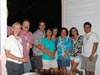
May 31
Cayman Island Twilight Zone 2007 exploration science team. (HR)
May 31
Darwin, "barophile" wannabe.
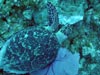
May 30
A hawksbill turtle feeds on a sponge. (HR)
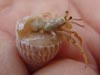
May 30
We found this hermit crab at the steps of the Little Cayman Research Center. (HR)
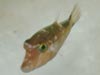
May 30
Sharpnose puffer fish in wetlab during bioassay testing to see how the fish reacts to the various chemicals compounds. (HR)
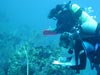
May 30
Scientists conduct a site survey on the abundance and location of marine life, sponges, and corals at a depth of 40 feet. (HR)
May 29
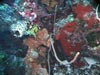
Here we can see zonation above 200 feet (60.9 meters) with about 10 to 20% sponge coverage.
May 29
A typical deep sponge community.
May 28
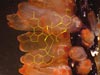
The Caribbean tunicate, Ecteinascidia turbinata, provides a good example of the biomedical potential of marine natural products. (HR)

May 27
One of the more common deep reef corals on the Little Cayman walls is Mycetophyllia spp. (HR)
May 27
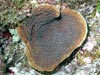
Plating agaricids are common down to about 200 feet on the Little Cayman walls. (HR)
May 27
The precious black corals are common on the wall faces, but we rarely find them above 150 foot (45.7 meter) depth. (HR)
May 27
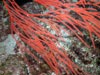
Several species of gorgonian octocorals occur on deep reefs. (HR)
May 26
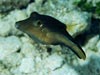
The sharpnose puffer fish, Canthigaster rostrata, our model "lab rat" for predator deterrence assays in the laboratory.
May 26
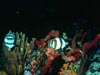
Butterfly fish, Chaetodon striatus, feed on sponges of a Caribbean reef.
May 25
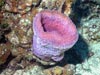
Some sponges, like this vase sponge (Callyspongia plicifera), do not host a microbial community that is substantially different from that found in the surrounding water column. (HR)
May 25
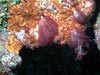
Tufts of filamentous cyanobacteria form large accumulations of individual microscopic cells. (HR)
May 25
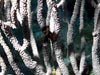
A frequently found cyanobacteria overgrowing benthic organisms, such as this soft coral. (HR)
May 25
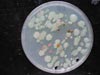
Each spot on this agar plate is a bacterial colony recovered from a marine sponge sample. (HR)
May 24
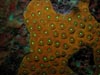
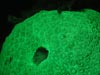
Montastrea cavernosa exhibiting orange and green fluorescence in the mouth of the polyps. (HR)
May 24
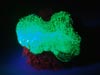
Montastrea cavernosa exhibiting green fluorescence only. (HR)
May 24
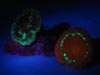
This Mussa angulosa, a single polyp, shows green fluorescence. (HR)
May 24
Examples of solitary coral, Scolymia cubensis, found at a depth of 150 feet. (HR)
May 23
Sponge biodiversity and morphotypes at the lip of our wall site in 60 feet of water. (HR)
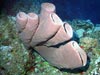
May 23
Agelas conifera, a common sponge in the Caribbean, is found over a broad depth gradient.(HR)
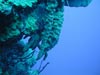
May 23
The brown sponge, Agelas conifera, can grow to enormous proportions on deeper reefs. (HR)
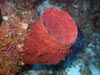
May 23
Xestospongia muta, the barrel sponge, may live for 100 years and grow to over 6 feet tall. (HR)
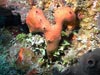
May 23
The liver sponge produces a series of important chemical compounds that deter predators. (HR)
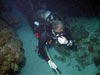
May 22
Twilight Zone technical diver Liz Kintzing lays a guide line along the wall face. (HR)
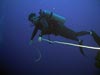
May 22
Twilight Zone technical diver Marc Slattery helps lay a guide line along the wall face. (HR)
May 22
Little Cayman has some of the steepest drop-offs in the Caribbean, because it is perched on the edge of the 7,500-meter-deep Cayman Trench. (HR)
May 22
A hawksbill sea turtle feeds on sponges, which are common in both deep and shallow reefs. (HR)
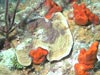
May 21
This lettuce coral, Agaricia sp., is one of the most common corals on the reefs of Little Cayman. (HR)
May 21
At the edge of the drop-off we find a diversity of sponges and hard and soft corals. (HR)
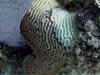
May 21
Black band disease was one of the first coral diseases identified back in the 1970s, and it remains one of the most prevalent diseases on reefs worldwide. (HR)
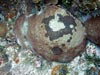
May 21
This blushing star coral, Stephanocoenia mechelinii, is severely affected by dark spot syndrome. (HR)
May 21
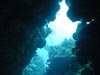
Outcroppings serve as homes for many species, including corals, fishes, and sponges. (HR)
Mission Plan
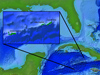
Cayman Islands Twilight Zone 2007 expedition research area map. (HR)
Mission Plan
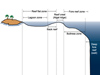
The zones profile of a typical coral reef. The deep fore-reef, or Twilight Zone (from about 50- to 150-meter depth), has rarely been explored. (HR)
Mission Plan
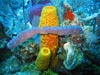
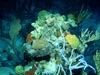
Typical sponge biodiversity of a shallow Caribbean coral reef. (HR)
Mission Plan
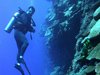
A diver explores the vertical distribution of corals on a Pacific wall. (HR)
Biodiversity
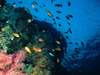
The biodiversity of vertical walls can be impressive, as this photo from the Indo-Pacific demonstrates. (HR)
Biodiversity
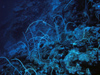
As light becomes limiting in the deep reef, fewer hard corals are able to survive. (HR)

Technical Diving
One of the earliest "rebreather" designs by Giovanni Borelli in 1680. (HR)
Technical Diving
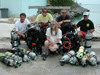
Technical diving research team with assorted tanks, carrying different mixtures of Trimix. (HR)
Technical Diving
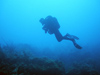
A more recent version of the rebreather allows this diver to swim over a Caribbean reef without bubbles. (HR)
Biotechnology
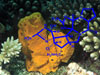
Drugs from the sea are one potential biotechnology product. (HR)
Biotechnology
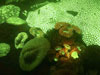
Flourescent proteins in these corals have important biotechnology applications. (HR)


