During the expedition, we invited the public to send questions to the team at sea; questions and replies are posted here.
Is this a new effort with regards to government involvement in shipwreck research? I don’t recall that the federal government (NOAA, in this case?) or the state government (the State of Michigan, in this case?) being proactive in shipwreck research. It seems like private outfits do most of the shipwreck research and the state and federal governments don’t get involved until a claim on a shipwreck site has been filed in some court somewhere.
Question from: Mark, Birmingham, Michigan
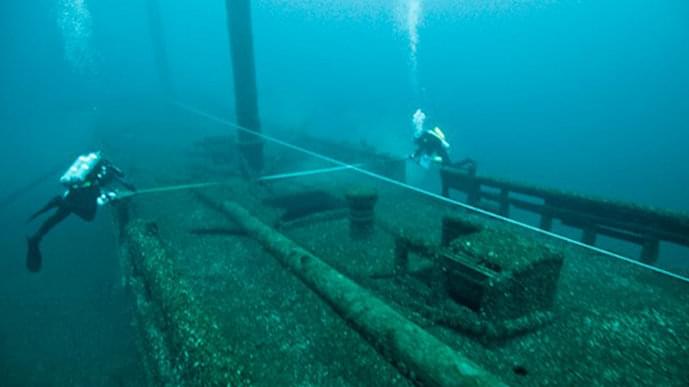
Over the past several years the Thunder Bay National Marine Sanctuary has engaged in a growing number of research projects, most of which are grant funded. The current project was funded by the NOAA's Office of Ocean Exploration and Research. In just the last two years, the sanctuary has conducted technical diving expeditions, multibeam sonar mapping projects, a “live dive” from a popular wreck in the sanctuary, and several other archeological documentation projects.
Answer from: Russ Green, Deputy Superintendent/Research Coordinator - Thunder Bay National Marine Sanctuary
As far as shipwreck research is concerned, has Lake Huron been somewhat ignored (excepting the Alpena preserve, of course)? It seems like all the high profile work is taking place on Lakes Michigan, Ontario, and Erie.
Question from: Mark, Birmingham, Michigan
It’s hard to say. Lake Huron has some of the Great Lakes’ best shipwreck diving, and, as you noted, there are lots of folks out there looking for new ones. Lake Huron research is probably on par with other Great Lakes, though over the last few years there has been some exciting finds in Lakes Michigan, Superior, and Ontario.
Answer from: Russ Green, Deputy Superintendent/Research Coordinator - Thunder Bay National Marine Sanctuary
Do you have any hopes that you might uncover an unexpected shipwreck site, like the Griffon? (I know they are looking at something in Lake Michigan, but I don’t know the latest there).
Question from: Mark, Birmingham, Michigan
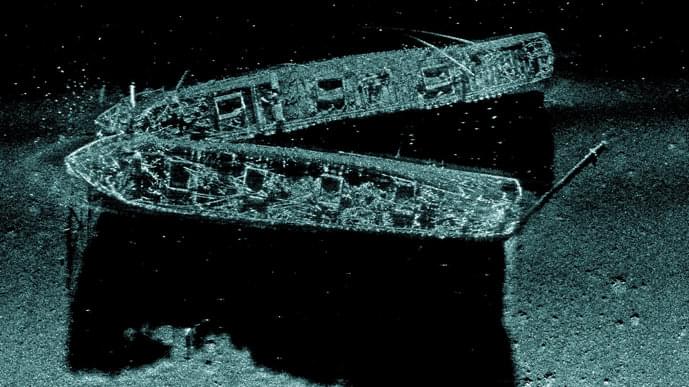
We do hope to find new shipwrecks, and as the website mentions there are a couple that may be in our search area. That said, you never know what will run up when you “mow the lawn” and methodically survey a large area. That “unknown” factor contributes a lot to the excitement of this kind of research.
Answer from: Russ Green, Deputy Superintendent/Research Coordinator - Thunder Bay National Marine Sanctuary
The land bridge between Michigan and Canada sounds fascinating. Do you expect to find much? Can you expect to uncover much with the equipment you now have? Would you have use for the type of remote controlled equipment Bob Ballard uses when exploring the higher profile wrecks like the Titanic — or would that equipment be overkill in the Great Lakes? Is Canada conducting similar research on the land bridge?
Question from: Mark, Birmingham, Michigan
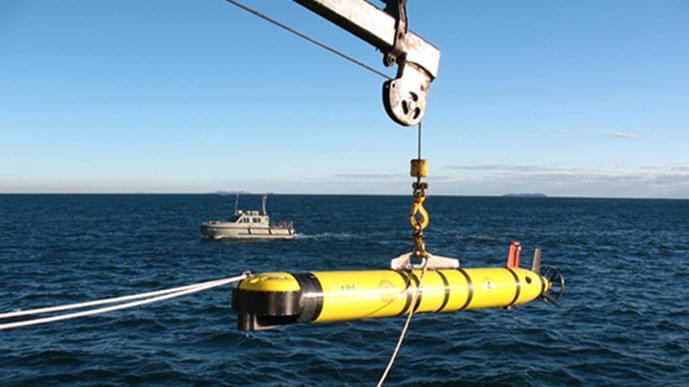
We do hope to find areas on the land bridge that would have made sense for prehistoric cultures to occupy. ATLAS may help us distinguish those areas. Then, as you mention, using a remotely operated vehicle (ROV) or divers will help us get a closer look at particularly attractive areas. Something like an ROV would be perfect for this next step in research. There is a Canadian research team looking at the landward portion of the land bridge where it connects in Canada.
Answer from: Russ Green, Deputy Superintendent/Research Coordinator - Thunder Bay National Marine Sanctuary