Ocean Exploration Facts
The ocean exploration facts in this section provide short answers to common or intriguing ocean questions. The questions are organized in a series of categories; click on a category to learn more about these topics.
For many ocean facts, content has been repurposed from essays posted elsewhere on the website; to access the original content, click on links available on individual ocean fact pages.
Fact Categories
All
Arctic
Canyon & Seamount Habitats
Coral Communities
Geology
Human Impacts
Invertebrates
Marine Archaeology
Marine Life
Multibeam Bathymetry
Ocean Adaptations
Ocean Properties
Seeps, Vents, & Volcanoes
Technology
Weather & Climate

What is microdebitage?

What is a mapping watchstander and what do they do?

What is an oxygen minimum zone?

What Is a Shakedown?

What is the difference between cold seeps and hydrothermal vents?

What is the deep scattering layer?

What Is High Seas Governance?

What are “marine meiofauna”?

The Diversity of Sponges

What is a "natural product"?

What are sclerites?

What is vertical migration of zooplankton and why does it matter?

Why do we explore the ocean?

What is a marine protected area (MPA)?

What is habitat connectivity and why is it important?

Are sea spiders really spiders?

What is Hydrography?

How much of the ocean has been explored?

What is the “EEZ”?

Why do we explore the water column?

What is the “deep” ocean?

What are the different types of plate tectonic boundaries?

How does the ocean affect climate and weather on land?

What features form at plate tectonic boundaries?

What is the difference between a stalactite and a stalagmite?

What is the difference between photosynthesis and chemosynthesis?

What causes ocean currents?

How big is the Pacific Ocean?
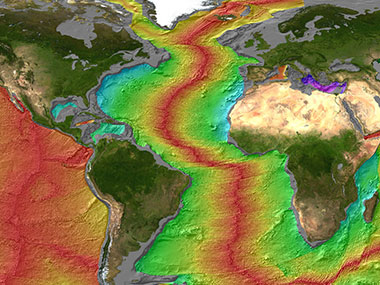
What is the mid-ocean ridge?

How does the ocean affect hurricanes?

What is Sargassum?

What is a hotspot volcano?

What causes ocean waves?

What is the Ring of Fire?

What is an ROV?

What is an isopod?

What is bioluminescence?

Why are so many deep-sea animals red in color?

What does “CTD” stand for?

What is symbiosis?

What is upwelling?

How does the temperature of ocean water vary?

How does pressure impact animals in the ocean?

How do deep-ocean habitats differ from ocean habitats near the sea surface?

What is the difference between a topographic and a bathymetric map?

What are marine microbes?

What are gas hydrates?

How deep is the ocean?

What is an AUV?

How does depth affect the color of marine animals?

Do volcanic eruptions happen underwater?

How do living organisms produce light?

What is a seamount?

How has the ocean made life on land possible?

Are glass sponges made of glass?

What is an Expendable Bathythermograph, or “XBT”?

How far does light travel in the ocean?

What is a narwhal?

What tools does a marine archaeologist use?

November 3: World Jellyfish Day

What is the Pacific Garbage Patch?

Why do we study shipwrecks?

Do medicines come from the sea?

Do all corals live in warm water?

What is ocean acidification?

How have animals living only in caves adapted?

Why are seamounts "hot spots" for biodiversity?

Why is the USS Monitor famous?

What is "marine snow"?

Are corals animals, plants, or something else?

Which ocean is the smallest?

Are squat lobsters really lobsters?

What is El Niño?

How does NOAA deliver live video from ship to shore?
