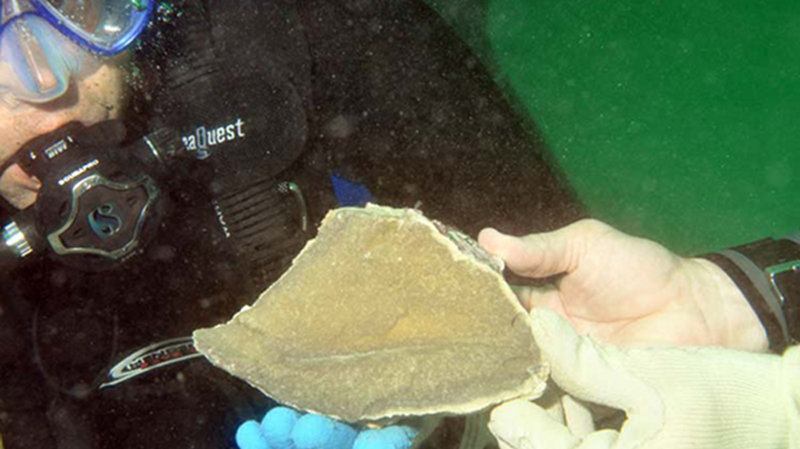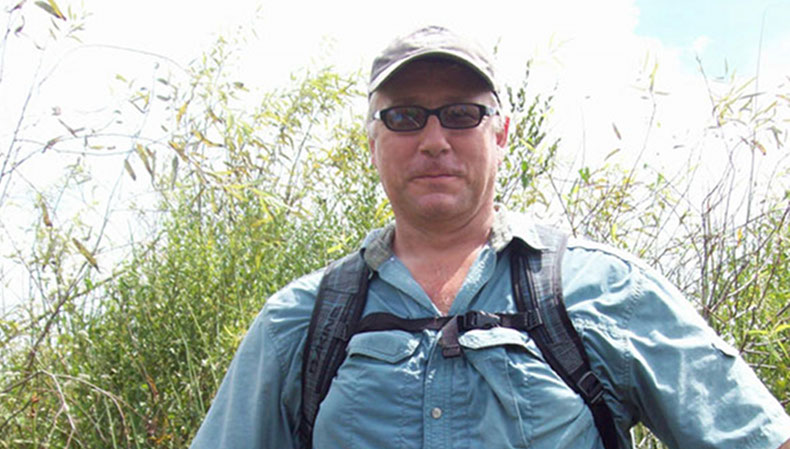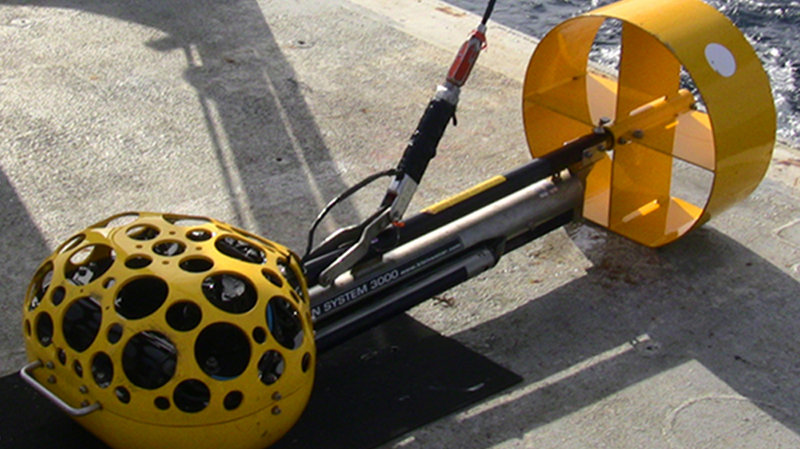
Join scientists as they return to the four dive sites they visited in 2009, to study the biology, geology and oceanography of a series of canyons off the middle Atlantic coast of the U.S. Click image for larger view and image credit.
Exploring the Submerged New World
August 8-18, 2011
J.M. Adovasio
C. Andrew Hemmings
Expedition Principal Investigators
Mercyhurst College
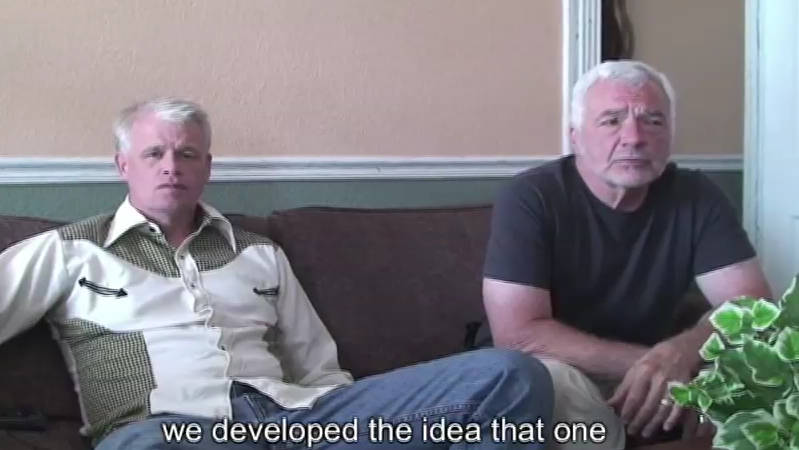
C. Andrew Hemmings and James Adovasio discuss this year's project.
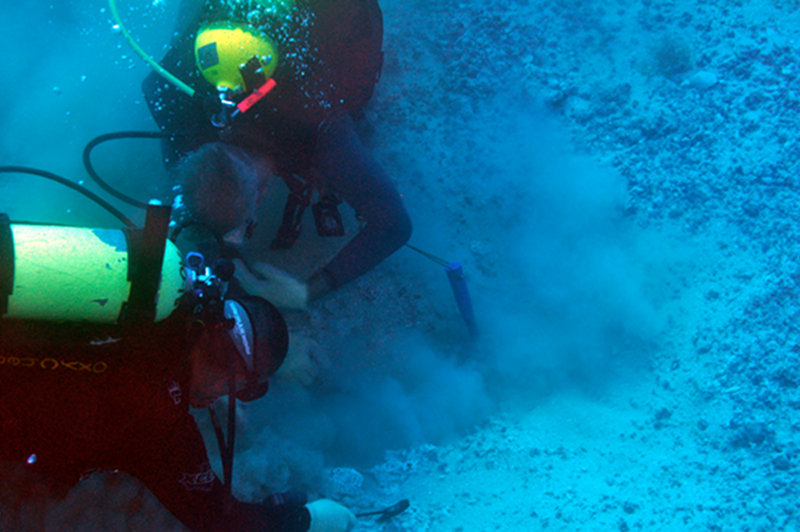
In the coming weeks our team of underwater archaeologists from across the country, led by James Adovasio and Andy Hemmings of Mercyhurst College, will be diving at four sites that we first visited in 2009. At these locations we have already electronically documented intact river channel features of the Pleistocene Suwannee River which are now filled with multiple layers of sediment. These sites are covered by 40 to 130 feet of ocean water and are located 50 to 125 miles offshore of the modern Gulf Coast of Florida northwest of Tampa or southeast of Tallahassee. The three shallower sites have bedrock exposed on the seafloor that forms one side of the buried channel. The bedrock at each of these sites is low grade knappable toolstone that could have been used for tool making. The deepest site, Thor’s Elbow, is the intersection of the ancient Suwannee and another river where we expect to find more knappable bedrock buried under the modern surface.
The Exploring the Submerged New World 2011 Expedition is funded in part by Mercyhurst Archaeological Institute. Click here At each of these sites we hope to locate prehistoric human made artifacts, bones of Pleistocene animals, such as the mastodon, and perhaps datable organic material such as pieces of wood. Any such finds would indicate that the now inundated Pleistocene landscape of Florida in the Gulf of Mexico is still preserved, accessible to archaeologists, and contains prehistoric evidence of the use of this landscape by people and animals alive at the end of the last Ice Age.
A modern map of Florida shows (with a dark line) the approximate location of the Last Glacial Maximum (LGM) coastline. During the Late Pleistocene, Florida's shoreline extended much farther offshore than the present coast. The general project area is indicated. Click image for larger view and image credit.
You can access the Ocean Explorer Exploring the Submerged New World 2011 News Feed here: ![]()
Sign up for the Ocean Explorer E-mail Update List.