


Photo & Video Log
This page contains photos and videos taken during the Medicines from the Deep Sea: Exploration of the Gulf of Mexico expedition that took place September 8-19, 2003. Click on any image to view a larger version and for additional information. If a picture of a movie camera icon  is present, a video can be viewed by clicking on the image.
If a picture of a slideshow icon  is present, a visual log of exploration images can be viewed. You can scroll through them one by one, or select the play button for an automatic slideshow.
(HR) = "High Resolution" images available.
Video & Slideshows
September 17
The diversity of marine life hidden beneath oil platforms. (mp4, 3.4 MB)

September 11
Forcepia, not just your ordinary sponge. (mp4, 1.5 MB)
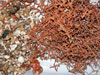
Summary
Various sponges and octocorals collected during the "Deep Sea Medicines 2003 Expedition."
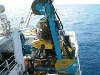
September 9
The Innovator ROV being launched from the stern deck of the NOAA Research Vessel Ronald H. Brown.
Images
Summary
Scientists donned their SCUBA equipment and dove in shallow water.
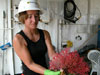
Summary
Gail Samples displays a coral collected during one of the day’s dives.
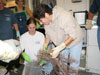
Summary
Priscilla Winder (left) and Shirley Pomponi (right) placing samples in plastic bags for preservation.
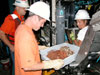
Summary
Sonsub Inc. crewmembers Lucas Cribley and Greg Wardwell assist Tara Pitts with samples.
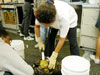
Summary
Shirley Pomponi removing a bright yellow sponge from a sea floor sample.
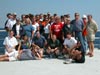
September 19
The entire Deep Sea Medicines 2003 crew on board the NOAA Ship Ronald H. Brown.
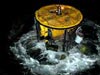
September 19
ROV Innovator during a recovery at night. (HR)
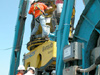
September 18
Inovator sample buckets being unloaded after dive.
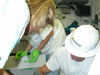
September 18
Scientist examine sample buckets after a dive.
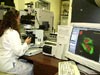
September 18
A typical confocal microscope system.
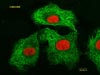
September 18
Untreated cancer cells.
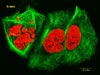
September 18
Drug-treated cancer cells.
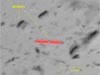
September 18
Bacteria from a sponge cell suspension.
September 18
Autofluorescent bacteria from a sponge cell transmitted light and Krypton Laser.
September 17
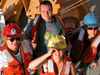
The divers who participated in SCUBA operations.
September 17
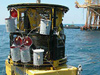
The ROV Innovator during a morning launch. (HR)
September 17
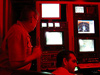
Captain John Wilder checking out operations in the ROV van.
September 17
Operations in the ROV van.
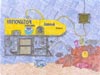
September 16
Graphical sketch of the Sonsub Inc. ROV Innovator.
September 16
Helicopter leaving platform during a launch of the ROV.
September 16
Oil sparr at sunrise.
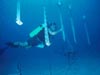
September 15
Experimental aquaculture farm of deep-water sponges. (HR)
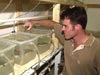
September 15
The supply of sponges and tunicates are researched for use in drug development. (HR)
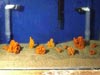
September 15
Growth and feeding studies on sponges are conducted under controlled conditions. (HR)
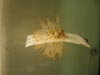
September 15
Tunicates are studied at HBOI because they produce bioactive compounds. (HR)
September 14
Lithistids are a very rare group of sponges recovered during September 14 dive. (HR)
September 14
Gail Samples, preparing an extract for culture.
September 14
NOAA Corps Officer LTJG Jennifer Pralgo looking over a navigational chart.

September 14
Chief Steward Richard Whitehead.
September 13
Taking sponge samples for analysis.
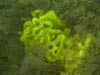
September 13
A Clathria sponge. (HR)
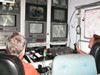
September 13
Making skilled maneuvers of the ROV during a dive.
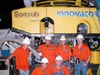
September 13
Sonsub Inc. crew.
September 13
C&C Technologies team.
September 13
Morning launch of the ROV.
September 13
In the wet lab waiting to see what was brought up from the dive.
September 13
Lucas Cribley and Geoff Ellett making adjustments to the ROV.
September 12
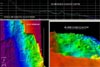
Multibeam image of Mullins Lithoherm.
September 12
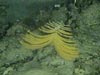
This tanish/orange colored sea fan.
September 12
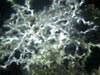
Bush of deep water coral Lophelia pertusa.
September 12
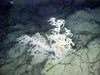
Black coral bush.
September 12
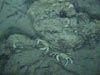
A pair of deep-water crabs was among many of the “bonus” marine organisms.
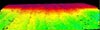
September 12
3-D multibeam image of the Westward view of “Forcepia-land” escarpment.
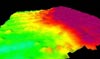
September 12
3-D multibeam image of the Northward view of “Forcepia-land” escarpment.

September 11
The bright-orange Forcepia sponge. (HR)
September 11
Jeremy Potter and Gary K. Wolfe getting their hands wet examining Forcepia.
September 11
Dr. Shirley Pomponi isolating pure Forcepia cells for culture.
September 11
A solution of Forcepia cells after being placed in a centrifuge.
September 11
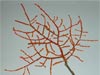
A Gorgonia Swiftia sp.
September 10
Innovator being recovered.
September 10
Jane Thompson, preparing a sample of Acarnus for DNA extraction.
September 10
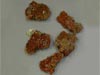
An unexpected finds during the first dive, Acarnus sp. (HR)
September 10
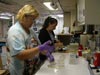
Acarnus sp. plated on petri dishes for cell culture.
September 10
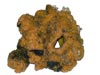
Recovered on the second dive a sponge from the Verongida family. (HR)
September 10
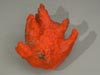
The sponge Forcepia is the source of the lasonolides. (HR)
September 10
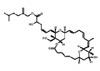
The structure of lasonolide A, a potent cytotoxic agent.
September 10
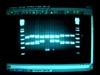
Agarose gel electrophoresis is used to visualize DNA extracts.
September 9
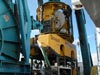
Mobilization of the Innovator on the NOAA research vessel Ron Brown.
September 9
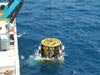
The Innovator being submersed during the test dive.
September 9
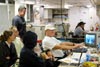
The science party view real-time footage from the Innovator during the test dive.
September 8
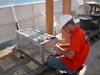
Sonsub Inc. ROV Innovator technician preparing for the mission.
September 8
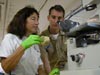
Shirley Pomponi and LTJG Shawn Maddock view a sponge.
September 8
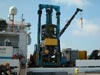
Port side view of the Sonsub Inc. ROV Innovator.


